


Why Stainless Steel Chase Covers Are One of the Most Important Chimney Protections

One of the most overlooked components of a factory-built chimney system is the chase cover. Homeowners often assume the chimney pipe itself is the main protective element, but the chase cover is actually what protects the entire chimney structure from water intrusion.
In many homes, especially those with prefab fireplaces, the chimney pipe runs inside a framed enclosure called a chimney chase. At the top of that enclosure sits a metal lid known as the chase cover. Its job is simple but critical: it seals the top of the chase while allowing the flue pipe to pass through safely.
When this component fails — which happens frequently with cheaper galvanized covers — the results can be extensive.
What a Chase Cover Actually Does
A chase cover acts as the roof for the chimney enclosure. Without it, rain, snow, and debris would enter the chase directly. Over time that would damage framing, insulation, chimney components, and the fireplace system itself.
A properly designed chase cover includes:
●A raised collar where the flue pipe passes through
●A slope or crossbreak to shed water
●Drip edges to prevent water from running down the chase walls
●Sealed seams to prevent moisture entry
When installed correctly, the chase cover protects both the chimney system and the structural components inside the chase.
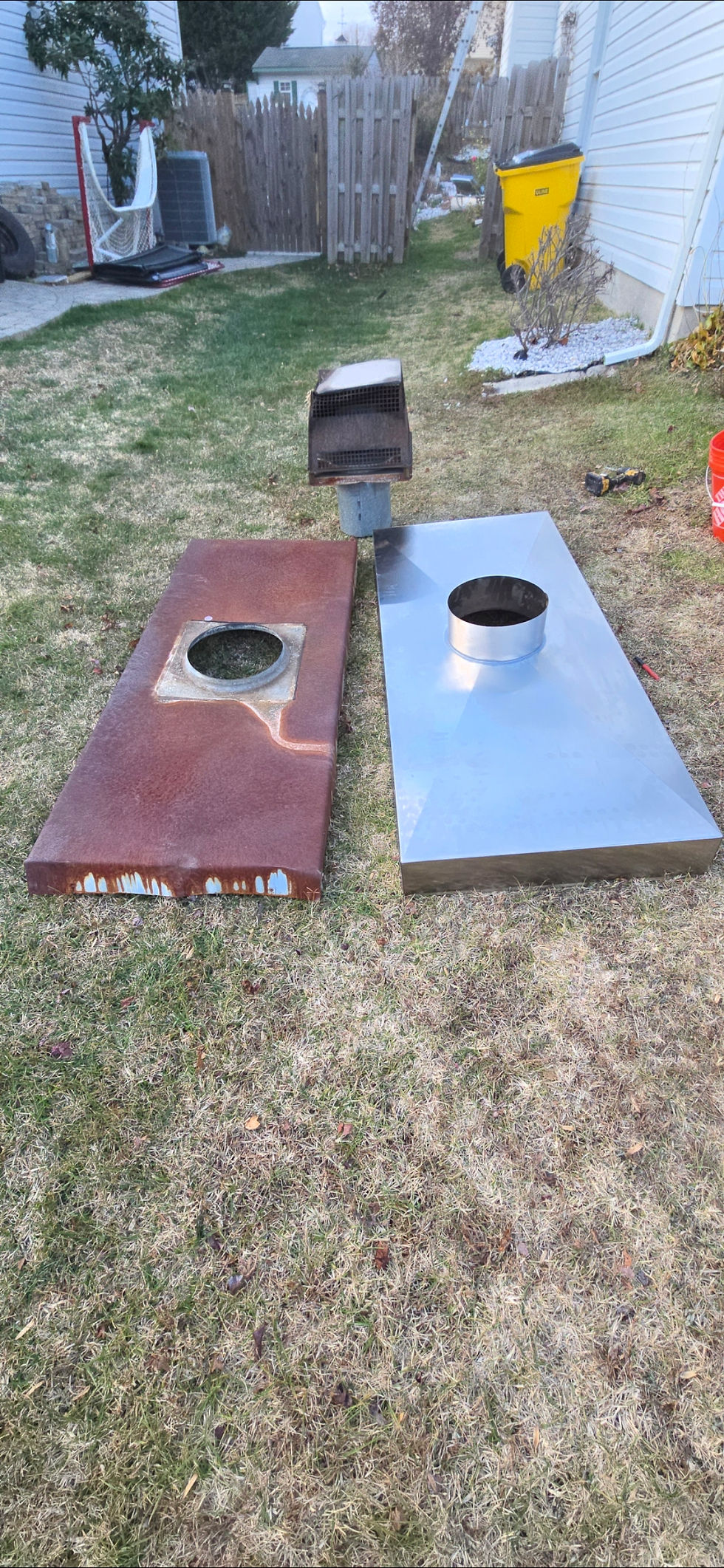
Why Cheap Chase Covers Fail So Often
Many builders install galvanized steel chase covers when a home is first constructed. While galvanized metal offers some corrosion resistance, it is still vulnerable to rust over time — especially in climates with significant rain, humidity, and temperature swings.
Over the years, exposure to moisture and acidic exhaust gases gradually breaks down the protective coating. Once that coating deteriorates, rust begins forming on the metal surface. Eventually the rust eats through the cover entirely, creating holes where water can enter the chase.
Because chase covers sit high above the roofline, these failures often go unnoticed until significant damage has already occurred.
The Hidden Damage Caused by a Failing Chase Cover
When water enters through a rusted chase cover, it doesn’t just drip onto the chimney pipe. It can begin affecting the entire system.
Water intrusion can lead to:
●Rusted chimney pipes and connectors
●Deteriorated fireplace components
●Soaked insulation inside the chase
●Rotting wood framing
●Mold growth
●Staining on ceilings near the fireplace
In severe cases, long-term moisture exposure can even compromise the structural stability of the chase enclosure.
Because the source of the leak is at the very top of the chimney, homeowners often spend time investigating roof leaks or siding problems before realizing the chase cover is the true culprit.

Why Stainless Steel Chase Covers Are the Best Solution
Replacing failing galvanized covers with stainless steel chase covers is one of the most effective upgrades homeowners can make.
Stainless steel offers several key advantages:
Corrosion resistance
Unlike galvanized steel, stainless steel resists rust even when exposed to moisture for decades.
Longer lifespan
A properly fabricated stainless steel chase cover can last several decades, often outlasting the chimney system itself.
Structural durability
Thicker stainless steel covers resist warping, denting, and seam separation better than thinner builder-grade materials.
Better water management
Quality stainless covers include crossbreaks and drip edges that direct water away from the chase and prevent pooling on the cover surface.
The Importance of Proper Design
Not all chase covers are equal. Custom-fabricated stainless steel covers perform far better than generic replacements.
A properly designed cover should include:
●Welded seams for durability
●Raised collars around flue penetrations
●Crossbreaks for drainage
●Drip edges along the perimeter
●Correct sizing for the chimney chase
Without these features, even stainless steel covers may allow water to collect or enter the chase.

Signs Your Chase Cover May Be Failing
Homeowners rarely inspect their chase cover directly, but several warning signs may indicate a problem.
These include:
●Rust streaks running down the chimney chase
●Water stains on ceilings near the fireplace
●Damp or musty odors near the fireplace
●Visible rust or holes in the metal cover
●Pieces of rusted metal around the chimney base
If any of these symptoms appear, the chase cover should be inspected promptly.
Why Preventive Replacement Matters
Many homeowners wait until a chase cover fails completely before replacing it. By that time, water may have already damaged chimney components or structural framing.
Replacing a deteriorating galvanized cover with stainless steel early prevents long-term damage and protects the entire chimney system.
Considering how much water a chimney is exposed to over its lifetime, the chase cover plays a much larger role in chimney longevity than most homeowners realize.
If your home has a factory-built chimney system, inspecting the chase cover periodically is one of the simplest ways to prevent expensive water damage. Homeowners in Bel Air, Forest Hill, Aberdeen, and throughout Harford County can benefit from replacing aging galvanized covers with durable stainless steel versions designed for long-term protection.


Comments